Game Prototyping
Trying to find something that sounds fun. Then making a small prototype to see if it actually is.
 Project filmMy Co-op Game Needed More Than New MapsWatch on YouTube ↗
Looking for the fun bit
I’m trying game ideas and seeing which ones make me want to keep going. There isn’t one settled game here yet. This is a place for small prototypes, half-formed ideas, and the occasional change of direction.
First dev log: Tall Tales
The first experiment has the working title Tall Tales. It started with Unity assets I already owned and a loose idea for something fun to play with friends: a little Castle Crashers inspiration, some roguelike ideas, and no finished design.
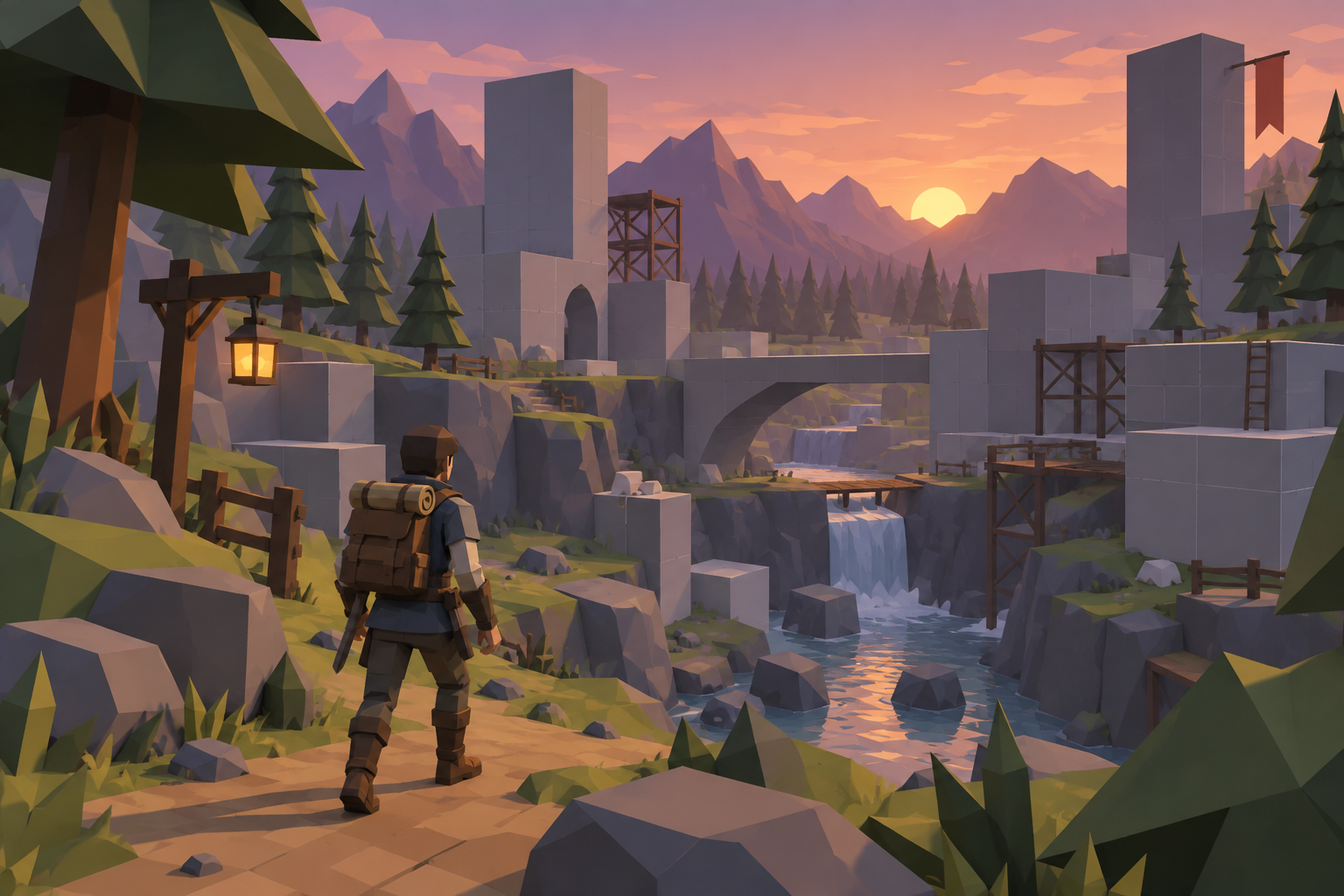
The first version was an isometric arena with waves of enemies. It now connects combat clearings with trails the party can explore in different directions. There are eight starting heroes with different equipment, weapons and armour to find, healing potions, and a chest after each boss. Several rounds of iteration have focused on the menus, attack timing, enemy variety, and the look of the environments.
Watch the first dev log on YouTube. It follows the prototype from the arena idea to the current adventure, using gameplay from a four-player automated playtest. Nothing is set in stone: the combat, world, or whole direction could change as I keep looking for the fun.
Tall Tales: giving the adventure a purpose
Since that first look, Tall Tales has started to find a direction. The adventure now has a destination, and the work on Murkwood Marsh has been about making it fit together as a fuller chapter. There are more reasons to explore, distinct hero abilities, and new decisions in combat, alongside changes to heroes and loot.
Watch the second Tall Tales dev log on YouTube. The footage comes from the Unity editor, with automated test players filling the other co-op slots. It records the next step in the experiment; the direction could still change.
Tall Tales: more than new maps
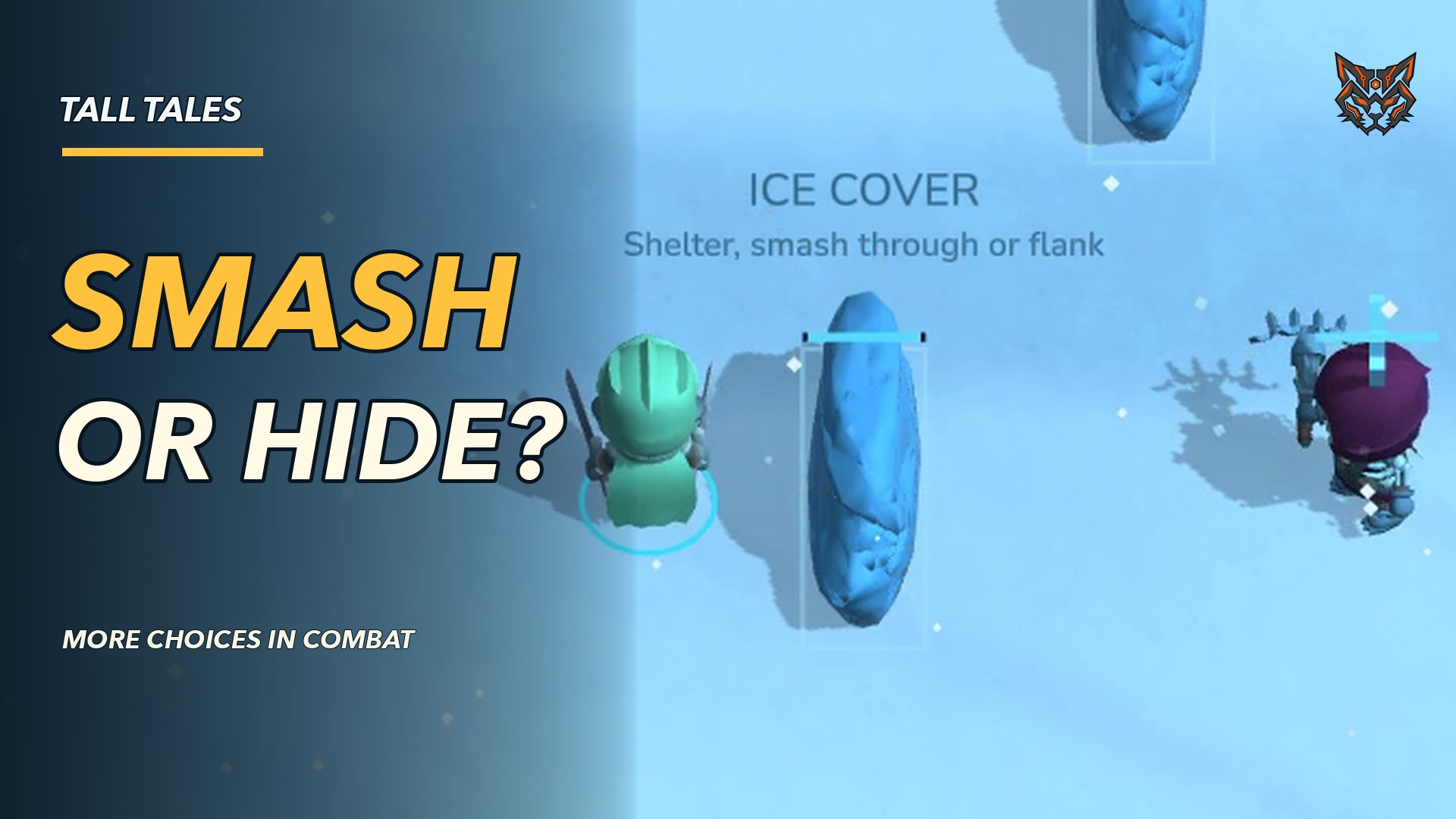
Tall Tales has grown from five lands to eleven, using more of the environment packs I already own. But changing the scenery only gets me so far if every fight asks the same thing. The latest experiments give the surroundings a part in the fight: ice barriers can protect me or block my route, mine carts can hit either side, and a raid caller can be interrupted before reinforcements arrive. A courier moving between lanterns adds a choice between chasing and intercepting.
The soundtrack now has an upbeat adventure theme for each region that keeps playing through ordinary fights, with heavier rock, metal and electronic tracks for bosses. There are also proper arrow models and smoother attack movement and hit timing. The music still comes from my local asset pipeline, and the narration uses my local voice clone.
Watch the third Tall Tales dev log: My Co-op Game Needed More Than New Maps. It focuses on what changed since the previous video, using current automated gameplay and controlled mechanic demonstrations. There are now 44 encounters, but more length does not tell me whether the whole journey feels good to play. Checking the full route, finding repetitive stretches and getting a proper playtest are next; the Dawn Beacon finale is still ahead.
Second prototype: Duskbound
Duskbound is the second experiment, and it started very differently. Tall Tales grew out of assets I already owned. Duskbound started as a single paragraph: an isometric open world with mining, different biomes, a day and night cycle, more monsters at night, combat instead of survival chores, and multiplayer from the start. I gave that brief and an empty folder to an AI coding agent. By the end of the first day it had a seeded world, day and night, mining, monsters and co-op, all built from simple shapes in code.
From there my job was mostly steering. It now uses toon environments, Stone Age hunters and realistic creatures I own, plus an Ash Golem from my local asset pipeline. The fighting has a point: each land’s boss guards a Beacon, and lighting all nine opens the way to the Dusk Sovereign. The Hearth is home base, and on a blood moon the monsters come for it. The latest work added builds: five weapons, three armour sets, and a relic from every boss.
Watch the first Duskbound dev log on YouTube. Every hunter in it is a bot: bots run the balance tests and the four-player co-op checks, which isn’t the same as friends having fun. It still needs real playtesting, a lot of polish, and some decisions about what to cut.
Get something playable
An idea can sound great until you try it. I want to get a mechanic or a short loop working, play with it, and see what is interesting before committing to a much bigger game.
A side project from building it
While prototyping, I started wondering how much of the game art and audio I could make locally. That grew into its own project, Local Asset Forge, a pipeline for generating models, sound effects, and music on my own hardware. The prototype now uses locally generated music and game voices from that setup. The dev log is also narrated with a local clone of my own voice from Local Voiceover Lab. The scenery and characters still use purchased SICS and free KayKit assets.
Both the asset-pipeline video and the voice-cloning video show those separate experiments. They grew out of trying to make something playable.
What I’m looking for
Something I want to play again, or an idea that gets more interesting once it is running. For now, finding that is the project.
Project timeline
Along the way
- Latest update
Tall Tales — more than new maps
The adventure has grown from five lands to eleven, but new scenery only goes so far if every fight asks the same thing. The third dev log shows ice cover, optional mine carts, interruptible raid callers and courier interception, alongside new music and combat polish. These are working prototype examples; the full route still needs playtesting, and the Beacon finale is still ahead.
Video update · Watch on YouTubeMy Co-op Game Needed More Than New Maps Tall Tales — giving the adventure a purpose
Tall Tales is starting to find a direction beyond the first prototype. The adventure now has a destination, Murkwood Marsh is a fuller chapter, and distinct hero abilities bring new decisions to combat. The second dev log looks at reasons to explore, heroes and loot, and what comes next. Everything is still an experiment and could change.
Video update · Watch on YouTubeGiving My AI-Built Game a Purpose | Tall Tales Dev Log 02Second prototype — Duskbound
Duskbound started differently from Tall Tales. One paragraph describing an isometric open-world co-op survival game went to an AI coding agent with an empty folder, and by the end of the first day it had a seeded world, day and night, mining, monsters and co-op. Since then the work has been steering it — owned art, a goal of relighting nine Beacons against the dusk, the Hearth and blood-moon sieges, and builds with weapons, armour and boss relics. Bots playtest it; real players haven't yet.
Video update · Watch on YouTubeBuilding a Co-op Survival Game with AI | Duskbound Dev Log 01First dev log — an adventure prototype
Tall Tales started as a Castle Crashers-inspired co-op arena and grew into branching trails, different heroes and equipment, and boss fights across four environments. This first dev log records the experiment so far; the design could still change completely.
Video update · Watch on YouTubeBuilding a Co-op Adventure with AI | Tall Tales Dev Log 01